
The 4 Pillars of Self-Leadership
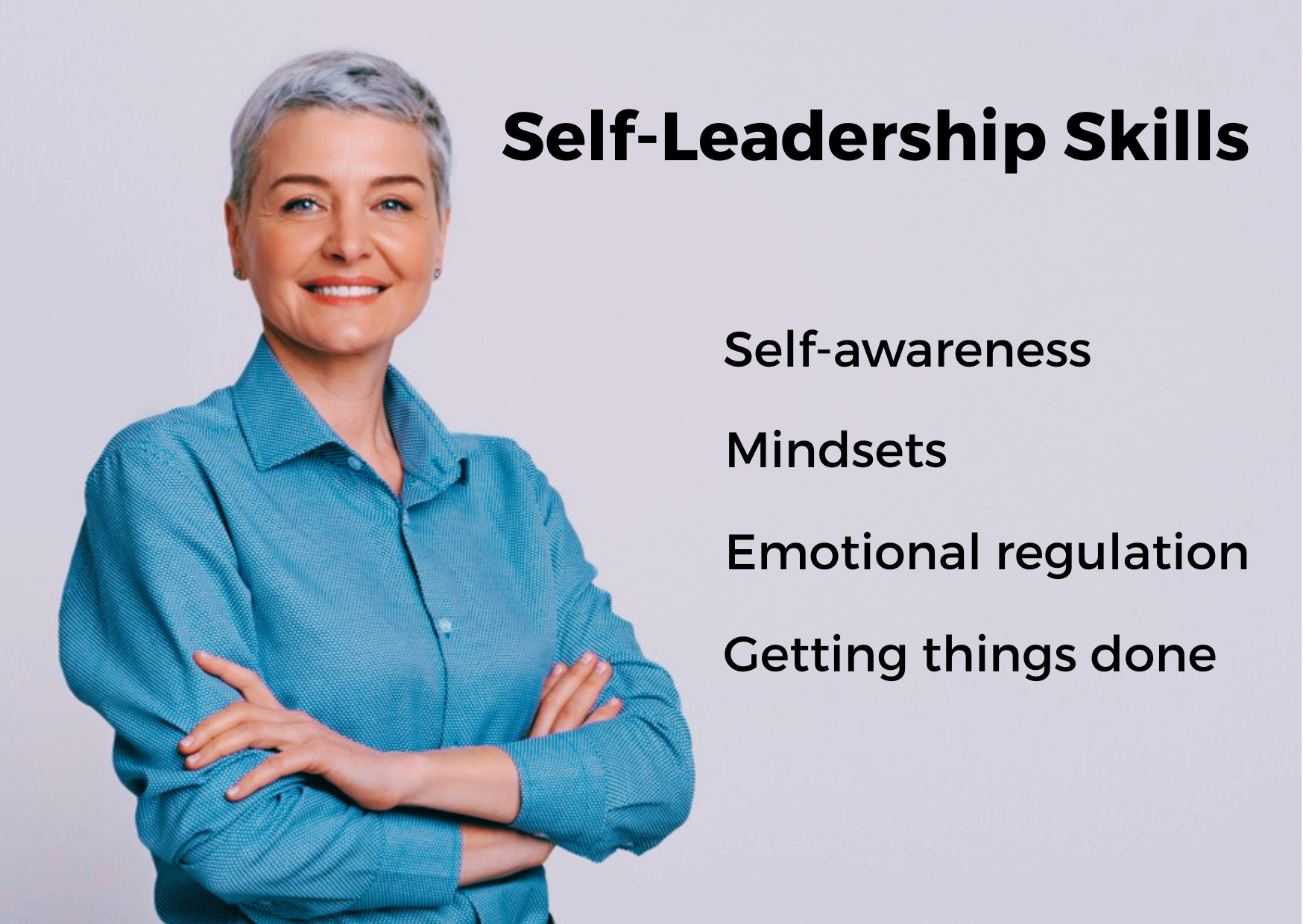
Four essential capacities that help leaders move from inner awareness to intentional action.
These four essential capacities provide a practical foundation for developing strong self-leadership.
Self-awareness
Self-awareness is the ability to notice what is happening within us—our thoughts, emotions, assumptions, strengths and habitual patterns—and understand how these influence the way we lead. Without awareness, much of our behaviour remains automatic.
For example: A leader notices that they become defensive when challenged and learns to recognize this reaction before responding.
Self-Regulation
Self-regulation is our capacity to manage our emotions, attention, energy and behaviour so that we can respond thoughtfully rather than simply react. It does not mean suppressing emotions, but learning to work with them constructively.
For example: Before answering a difficult email, a leader pauses, allows their emotions to settle and returns to it with a clearer mind.
Mindset
Mindset refers to the beliefs and interpretations through which we make sense of ourselves, other people and the situations we face. Learning to question unhelpful assumptions and adopt more constructive perspectives expands the choices available to us.
For example: Instead of seeing a setback as evidence of failure, a leader asks, “What can I learn from this, and what could I do differently?”
Getting things done
Getting things done turns awareness and intention into action. It involves setting priorities, managing attention and energy, and creating habits and systems that help us follow through on what matters—rather than simply responding to whatever feels most urgent.
For example: A leader identifies three priorities for the week and protects time in their calendar to move them forward.
__________________________________________________________________________
Self-coaching exercise
Self-leadership is not theoretical—it develops through practice.
1. Assess your current capacity
How would you rate yourself in each of the four pillars?
- Beginner
- Intermediate
- Fully proficient
2. Choose one pillar to strengthen
Select one area you would like to improve and set yourself a specific goal for the coming week.
For example:
- I will notice how people respond when I communicate under pressure.
- I will pause and listen fully before responding when someone challenges my view.
- I will ask one genuine question before dismissing a different perspective.
- I will schedule and initiate the difficult conversation I have been postponing.
At the end of the week, take a few minutes to reflect:
- What did you notice?
- What changed?
- What would you like to continue practising?