
How Self-Leadership is linked to business results
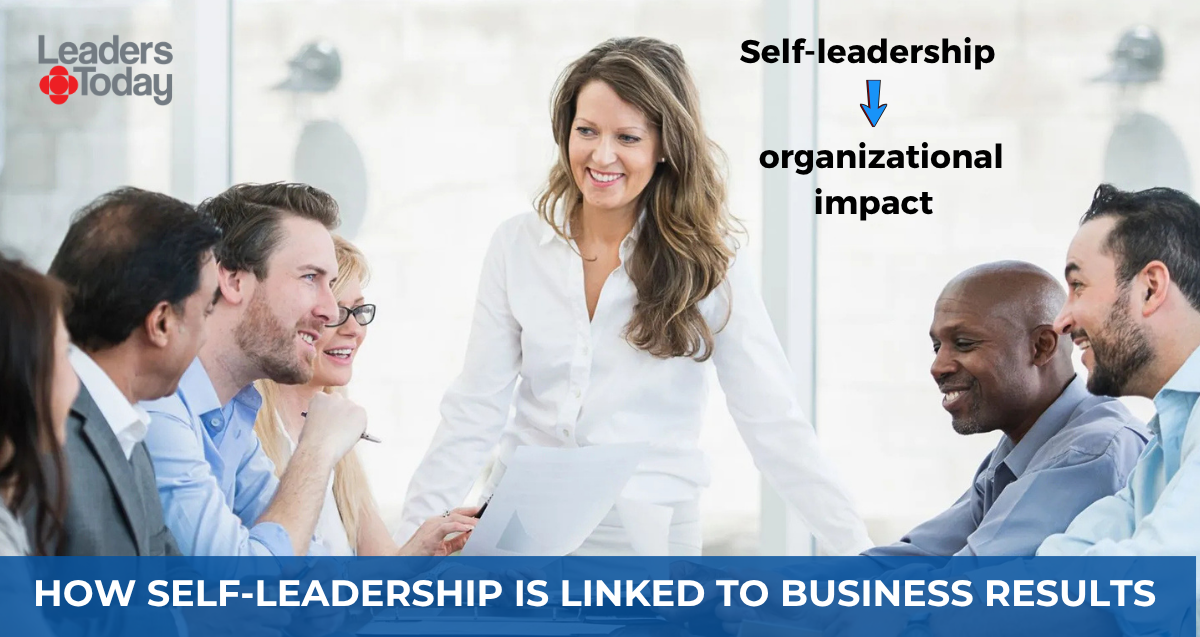
How the inner capacities of leaders shape behaviour, teams, and organizational performance
Self-leadership is sometimes placed in the “personal development” category: useful for the individual, perhaps, but somewhat removed from the serious business of organizational performance.
I think that interpretation misses an important point.
For a leader, self-leadership is not simply about feeling better, knowing oneself better, or becoming a more fulfilled person, valuable as those things may be. It affects how that person leads.
And how leaders lead affects how organizations perform.
A useful way of seeing the connection is:
Lead Self → Lead Others → Lead the System → Business Outcomes
In reality, the relationship is not as simplistic nor perfectly linear. Many factors influence organizational performance. But there are clear mechanisms through which stronger self-leadership can contribute to better leadership and, ultimately, better business results.
It starts with the leader
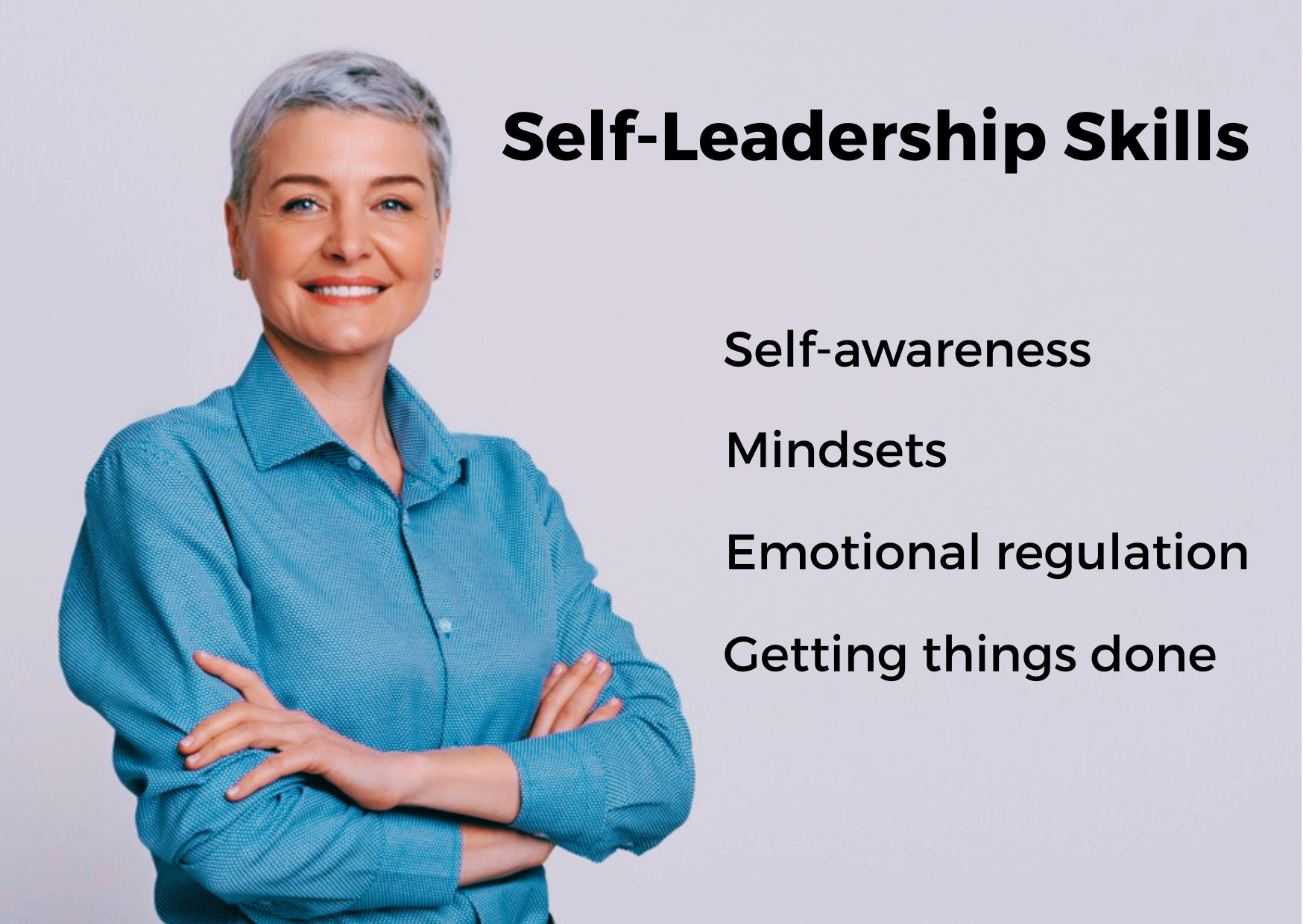
Self-leadership includes many capabilities, such as self-awareness, emotional regulation, clarity of purpose, resilience, focus, intentionality, energy management and the ability to align behaviour with one's values and priorities.
These may sound like highly individual features, but their consequences are not.
Consider emotional self-regulation. A leader who can recognize rising frustration during a difficult meeting and regulate their response is better able to remain curious, listen, assess the available information and respond deliberately rather than react impulsively.
That is self-leadership in action.
But the impact does not stop with the individual. The leader's response influences the quality of the conversations in a group too. It may determine whether colleagues feel able to challenge assumptions, how conflict is handled, how client relations are managed and, potentially, the quality of the decisions that emerge.
Something happening inside the leader has begun to affect the system around them.
When Lead Self becomes Lead Others
Leaders inevitably transmit aspects of their internal state into their relationships.
A leader who is reasonably self-aware is more likely to notice the impact of their behaviour on others. If they can manage stress they are less likely to transfer stress indiscriminately to the team through unconscious mood contagion, or explicitly tense behaviours. A leader with clarity about priorities can communicate these more consistently, and not keep changing their mind. A leader who can challenge their own assumptions is better equipped to listen to different perspectives.
Over time, these behaviours influence trust, communication, psychological safety, accountability, collaboration and engagement.
This is where self-leadership begins to become organizational.
What does the Science Say?
There have been many studies in this area and a short list of references is available below. But perhaps the most famous is Daniel Goleman’s work on emotional intelligence which helped establish that qualities such as self-awareness, self-regulation, empathy and social skill are not simply “soft” leadership attributes: they can influence measurable business results.
His research linked emotionally intelligent leadership to the climate leaders create around them, which in turn affects employee motivation, performance and ultimately what he describes as “bottom-line performance.” In this sense, the leader’s inner world, how they understand and manage themselves and their impact on others, can have consequences that extend well beyond the individual leader to organizational results.
Let's see some examples that I have experienced in my work as Executive Coach.
The same pressure, very different leadership
Imagine two managers facing the same period of significant change.
One is overwhelmed due the uncertainty in the work environment, communicates inconsistently, changes priorities frequently and reacts defensively when questioned. The other is also under pressure, but notices their own stress response, steps back to reset, takes time to establish priorities, communicates uncertainty honestly and remains open to information from the team.
Neither leader can remove the uncertainty.
But they create very different conditions in which their teams operate.
And those conditions matter for performance.
When Lead Others becomes Lead the Business
The next connection is equally important.
Organizations do not execute strategy in the abstract. People execute strategy.
Decision quality, collaboration, adaptability, innovation, problem solving and effective implementation, all these important leadership competencies depend, to some extent, on how leaders and teams behave.
For example, I worked with a leader who had strong self-leadership and, at an intellectual level, was perfectly able to distinguish between an instinctive reaction and a pondered strategic response. But in the heat of the moment, they had difficulty in putting this into practice and would often regret how they had dealt with the situation.
We worked on the typical conditions that brought out defensivness or impatience: having to maintain focus amidst multiple priorities, feeling destabilized when a quick change of direction was required, hearing uncomfortable information.
With more self-awareness and practical tools to tackle these situations, the leader was able to smooth out their communication style and work more effectively with their team. This in turn improved team performance because there was less time spent on managing tense relationships and more energy devoted to getting things done, being innovative and feeling more motivated.
The leaders's personal capacities were being applied to business problems.
It's common sense really, but strangely overlooked by many workplaces.
Resilience is personal and organizational
The same principle applies to resilience. Organizational resilience is partly structural in that systems, resources, processes and contingency planning matter enormously. But organizations also need people who can function effectively under pressure, adapt to changing circumstances and help others regain direction after disruption.
The individual and the organizational are therefore much more interconnected than we sometimes acknowledge.
From leadership behaviour to business outcomes
This brings us to the final part of the chain:
Lead Self → Lead Others → Lead the Business → Business Outcomes
Business outcomes might include productivity, employee retention, customer satisfaction, execution against strategic priorities, innovation, operational effectiveness, adaptability and, ultimately, financial performance.
It would be misleading to claim that improving a leader's self-awareness automatically increases profitability. Organizational performance is far too complex for that.
Nonetheless, with all the research on leadership in the past decades, we do have a sense of which leadership behaviours have a positive impact on the bottom line.
We know that greater emotional regulation can support better decisions under pressure, greater self-awareness can improve feedback and relationships, stronger focus can reduce constant reprioritization and support more consistent execution, and greater resilience can help a leader navigate prolonged uncertainty without destabilizing the people around them.
These are areas for leadership development that come up regularly as
"needs for change" in executive coaching. For individual leaders, these changes can be quite transformational in the way they lead themselves and lead others.
When these changes occur across multiple leaders, their cumulative effect influences organizational culture and performance.
Self-leadership is not the destination
For leaders, developing self-leadership is not an inward-looking exercise whose purpose ends with the self. This is perhaps the most important distinction, the self is the starting point.
Leadership happens through a human being: through their attention, emotions, assumptions, decisions, conversations, behaviours and actions. Strengthening the person's capacity to manage these more consciously strengthens some of the fundamental mechanisms through which leadership is exercised.
This is why I increasingly think of self-leadership as the first business capability every leader needs.
Following the impact further
For HR and organizations, this also offers a useful way to think about leadership development. Rather than asking only whether a self-leadership intervention has improved someone's confidence, awareness or resilience, we can follow the impact further:
- What changed in the leader?
- What changed in their leadership behaviour?
- What changed for the people around them?
- What changed in the way work was performed?
- And what organizational outcomes might reasonably be connected to those changes?
That moves the conversation beyond seeing soft skills as "nice to have" versus business skills as "essential”.
Self-leadership is not separate from the work of leadership. It is one of the foundations from which that work is done.
Check out the link below to discover the 4 Self-Leadership Skills, assess your strengths in each and engage in a small practical exercise.
__________________________________________________
References:
- Goleman, D. (2000). “Leadership That Gets Results.” Harvard Business Review, March–April 2000, 78–90.
- Goleman, D., Boyatzis, R., & McKee, A. (2013). Primal Leadership: Unleashing the Power of Emotional Intelligence. Harvard Business Review Press.
- Wang, G., Oh, I-S., Courtright, S. H., & Colbert, A. E. (2011). “Transformational Leadership and Performance Across Criteria and Levels: A Meta-Analytic Review of 25 Years of Research.” Group & Organization Management, 36(2), 223–270.
- Koene, B. A. S., Vogelaar, A. L. W., & Soeters, J. L. (2002). “Leadership Effects on Organizational Climate and Financial Performance: Local Leadership Effect in Chain Organizations.” The Leadership Quarterly, 13(3), 193–215.
- Miller, J., & Keller, D. (2026). “6 Ways Leaders Harness Stress.” Harvard Business Review, July–August 2026
Practice!
Move from inner awareness to intentional action.
Self-leadership is not a single skill. It develops through four essential capacities: self-awareness, self-regulation, mindset and the ability to turn intentions into action.
Want to take this further?