
Hope and Re-hope
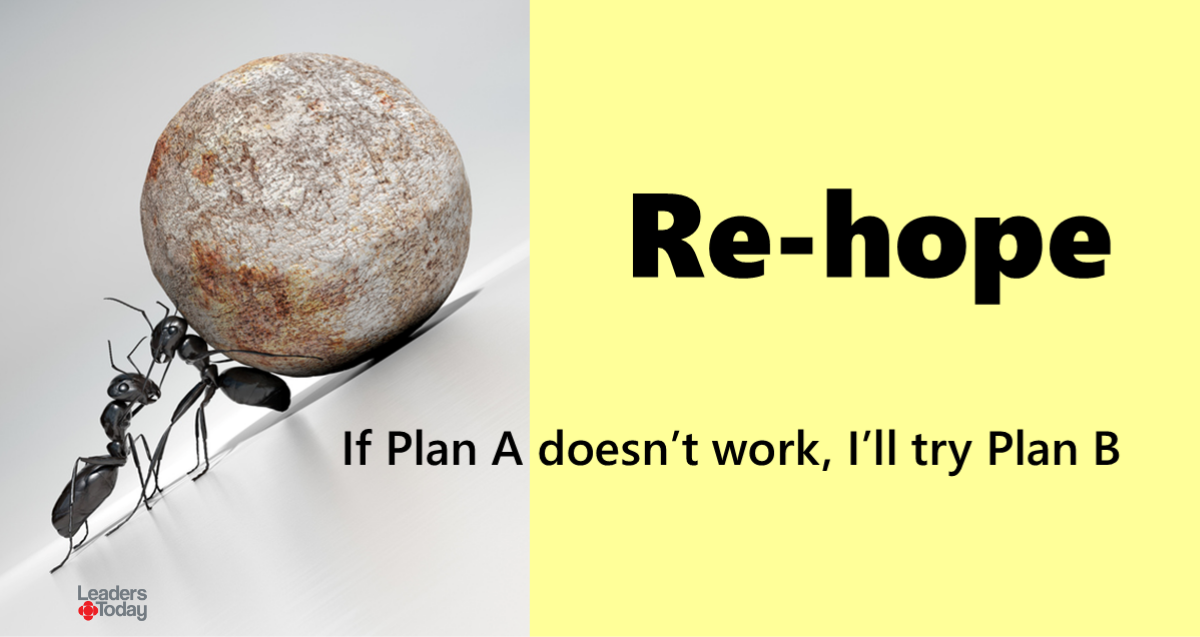
If Plan A doesn't work, I'll try Plan B
🏵️ This piece grew out of a talk with professionals facing job loss. It’s about change, moral injury, and the work of re-hoping — not only to kindle a feeling, but as an active, dynamic practice.
Earlier this autumn, I was invited to speak to a group of professionals who would lose their jobs at the end of the year. And now, that moment has arrived. Knowing this deadline was approaching has weighed heavily on my heart. Out of respect for the dignity and resilience of everyone who lost a job this year, I want this post to be more filled with hope than sadness.
The end-of-year holidays always stir up a strange mix of emotions. I still remember, so vividly, the excitement of my nephews when they were little, hiding upstairs, barely able to contain themselves as they waited for Santa to arrive. Even decades later, that memory fills me with a sudden swell of joy.
And yet, in many families — mine included — the expected seasonal lightness is softened by the loss of loved ones over the years. The chairs that will no longer be pulled up to the Christmas table. And still, we have so much to be grateful for. We carry sadness alongside gratitude. And somehow, both are true at the same time.
When I look at the world around me, I feel that same tension. There is so much to delight in, and just as much to despair over. With the constant, invasive flow of news, it’s almost impossible to sustain a festive bubble, sealed off from everything else that is happening. That can be uncomfortable. But I also think it matters. It keeps our empathy awake. It keeps our compassion from going dormant.
I want to share what I said that day in the fall, not to signal virtue, but on the chance that it might offer something — a word, a thought, a small anchor — to anyone else who finds themselves in a similar situation of job loss.
I had been asked to speak about managing personal change, drawing both on my work as a coaching professional and on my own life experience of having lived through an unjust, unwanted, and far-reaching change.
It was an online event, participants with different professions hailing from various parts of the world and mostly not knowing each other. I could not see them, nor feel the room in the way you can in-person, yet the virtual setting allowed for a safe space to address a sensitive topic.
This is what I said.
I began by talking about something I genuinely believe: every single one of us is already an expert in change. If you look back at your own life, you’ll find plenty of proof. Think of the times you stepped into the unknown, the moments you were knocked off balance, the defeats you endured, the discomfort you survived — and the fact that you are still here. Humans have an extraordinary capacity for resilience. That doesn’t erase the impact of painful change, but it does remind us that we are all sitting here today with a history of change behind us, and more change ahead of us too.
I also said this clearly: all layoffs are traumatic. Some come with explanations, others don’t. And very often, they leave behind a strong sense of injustice — personal, collective, sometimes even social. The loss isn’t just about a job, a salary, or a work permit. It’s also the loss of purpose. The loss of a mission. The loss of feeling useful in a way that mattered.
So if you feel outraged, you are not overreacting. You are reacting like human beings who cared deeply about what they were doing.
And when the work you were doing was demonstrably good for the world, the absurdity of being let go cuts even deeper. Especially when you know that real people, real beneficiaries, will suffer as a result. That knowledge leaves a mark.
From there, I spoke about change itself — and about a particular kind of change that feels especially wounding. When people are laid off because of what I call an “unjust” change, there is often a deep moral injury involved. It’s not only the familiar stages of shock, disorientation, grief, and rupture. It’s also the feeling that something you valued has been violated. That your values have been trampled on. Navigating this kind of change requires an acknowledgement of what you are going through - be kind to yourself - combined with the same grit that led you to embrace purpose-driven work.
In these moments, there is a certain urgency to reclaiming a sense of agency, it is the first step toward rebuilding. Of course, it can’t be rushed, processing unwanted change takes time. But it also can’t be postponed indefinitely. At some point, we need to begin finding new ways to create meaning and stability in our lives again, even while the ground still feels unsteady.
Sometimes stories reach places that explanations can’t, so I offered a metaphor: One day, this will be a story you tell. And like so many human stories, it has the shape of a hero’s journey. In myths and cultures all over the world, the hero is called to an adventure — often against their will. They cross a threshold they didn’t ask for. They feel lost. Afraid. Out of their depth.
But along the way, allies appear. Helpers show up. And although the journey is demanding, the hero does not walk it alone. I invited them to keep their eyes open for those allies — because they will be there — and to trust that this journey, too, will eventually bring them home with renewed strength.
I also spoke about the importance of staying connected. Shock, embarrassment, and fear have a way of pushing us inward. They whisper that we should withdraw, disappear, handle things alone. I warned them not to listen to that voice. Stay in contact. Talk to others — colleagues, including those who are still employed, friends, family. Collectives are a source of strength, of comfort, of shared information and resources. We are not meant to go through upheaval in isolation.
Then we turned to something very practical: the balance between outer work and inner work. When you lose your job, the outer demands quickly take over. Searching for new roles. Preparing applications. Going to interviews. Navigating administrative processes. Planning relocations. All of this is necessary, and often exhausting.
But it’s crucial to protect some energy for the inner work as well. For reflection. For making sense of what has happened. For processing emotions. For recentering. The inner work is not a luxury. It’s what gives you the stamina to keep going with the outer work without burning out or hardening inside.
I also invited them to take stock of their strengths — and I was very clear that this is not a superficial exercise. Yes, you need to articulate your strengths for your CV and for interviews. But even more than that, you need them for yourself. When the ground has shaken beneath your feet, naming your strengths is a form of self-validation.
Strengths are not only technical or professional skills like strategic thinking or stakeholder management. Your most important strengths are your values — the inner compass that guides you. And your personal qualities: the way you show up, the way you relate, the way you carry yourself in the world. These are your unique treasures. You need to know them, name them, and take ownership of them.
And then we came to the most important topic: hope. We often say that where there is life, there is hope — meaning that as long as we are alive, there is still the possibility of a good outcome. But research in psychology and medicine actually suggests something even stronger: where there is hope, there is life. Hope is a powerful predictor of well-being. It fuels motivation. It supports resilience. It helps us keep moving when things feel bleak.
So what can you do when hope feels lost?
Restoring hope is not a single moment. It’s a process, often called “re-hope” — an intentional shift from hopelessness toward small, doable actions, taken step by step. I briefly shared the work of psychologist Charles Snyder, who developed a theory of hope that is humane, practical and dynamic. At its core, it rests on three things: identifying goals that truly matter to you, believing that you have some agency to influence your life, and finding pathways — different ways forward, even when one path is blocked.
In everyday terms, I suggested thinking of re-hoping as a simple, repeatable process. First, pause. Step out of the whirl of anxious thoughts, even briefly. Breathe. Take a walk. Listen to music. Do something that gives your nervous system a break.
Then re-orient. Look at your situation from different angles. Ask someone you trust to help you see possibilities you can’t see alone. Allow yourself to imagine new dreams — even if they don’t yet feel realistic. Possibility often comes before feasibility.
And finally, design a few small steps toward those new directions. Nothing grand. Just something you can do. And if a path doesn’t work, pause again, re-orient again, and try another route. That, too, is part of hope. Hope is not stubborn optimism. It’s flexible persistence.
To all those who have lost their employment: you may have lost a job, but you have not lost your mission. You have not lost your commitment to something that matters. This moment — with all its difficulty and all its possibility — is now yours. Make it your own. Hope, and re-hope. And in time, write your own story of change. I wish you Godspeed on this new journey.