
Listening Culture

Listening Changes Everything

Listening is culture

Organizations invest enormous resources in speaking more clearly, communicating more effectively, leading more persuasively and influencing more successfully. Far less attention is given to the other half of communication:

our capacity to listen.


Yet listening influences almost every aspect of organizational life. It shapes relationships, it determines the quality of decisions, it affects innovation, collaboration, trust, conflict resolution and leadership.  Above all, it determines whether people truly understand one another.


Listening Culture is our approach to developing this often overlooked human capacity—not simply as a communication skill, but as a way of working, leading and being together.

Listening is more than hearing

Most people assume listening simply means paying attention. In reality, listening is an active, dynamic process.


Our perceptions, assumptions, emotions, habits, expectations and internal dialogue all influence what we hear—and what we completely miss.


Learning to listen therefore begins with learning to understand ourselves. Only then can we become genuinely available to others.

From individual listening to organizational culture

A listening culture is not created by teaching people a few communication techniques. It develops when listening becomes part of the everyday way people interact.


When leaders genuinely listen


  • Teams collaborate differently.
  • Problems are detected earlier.
  • Ideas circulate more freely.
  • People feel respected.
  • Conversations become more productive.
  • Trust grows naturally.


Listening gradually becomes one of the invisible forces that shapes the culture of the organization.


Our Approach

Our programmes combine practical tools with a deeper exploration of how listening actually works.


Participants learn to recognise their own listening patterns, reduce the internal "noise" that interferes with attention, and develop greater flexibility in the way they listen according to different situations.


Rather than teaching a single "correct" way of listening, we help people develop a richer listening repertoire—one that can be applied to leadership, teamwork, client relationships and everyday conversations.


The result is not simply better communication.

It is better understanding.

Why a Listening Culture?

Organizations often focus on improving how people communicate.  We help improve how people receive communication. Because communication only exists when someone has truly listened.


When people experience genuine listening, something changes.


  • Conversations become calmer.
  • Understanding deepens.
  • Collaboration becomes easier.
  • Conflict becomes easier to navigate.
  • Creativity has more room to emerge.
  • People become more willing to contribute.


Over time, listening stops being an individual skill and becomes part of the organization's culture.


That is the purpose of Listening Culture.


Current Programs

Our Listening Culture workshops can be delivered as standalone workshops or combined into a broader organizational development journey.   

Who it's for

Listening Culture is designed for:

  • Executive teams
  • Leaders and managers
  • Organizations developing collaborative cultures
  • Customer-facing teams
  • HR and People professionals
  • Project teams
  • Coaches and facilitators
  • Professionals who work through relationships


Organizational Impact

Studies on the impact of listening show that when leaders and organizations cultivate high-quality listening, they strengthen trust, improve collaboration, increase employee engagement and well-being, reduce burnout and turnover intentions, and contribute to better organizational performance.

Listening is associated with, and is likely a cause of, desirable organizational outcomes, including:


  • higher job performance
  • stronger leadership
  • better quality relationships and trust
  • improved job knowledge
  • more positive job attitudes
  • greater employee well-being


What does the research say?

Research on listening in the 21st century is rapidly expanding and has undergone a real paradigm shift. Long considered a simple passive skill (just the automatic counterpart to speaking), it is now studied as a complex cognitive, relational, and technological process. The main areas of current research:

1. The neurocognitive turn: What happens in the brain?

Thanks to advances in brain imaging (fMRI, EEG), neuroscience researchers have shown that listening is an intense brain activity.

2. Listening in the professional world and leadership

In management and organizational sciences, listening has shifted from being just a soft skill to a strategic tool.

3. Listening as a political and social issue

Finally sociology and political philosophy explore the 'crisis of listening.'


In short, in the 21st century, research does not see listening as merely hearing. It analyzes it as a crucial biological, relational and business skill needed to strenghten our attention,  understanding and social ties.


Your Facilitator

Jean-François Mathieu, CE

Founder of the Listening Culture Approach


For more than three decades, Jean-François Mathieu has explored listening, not simply as a communication skill, but as a uniquely human capacity that shapes relationships, creativity, leadership and organizational culture.


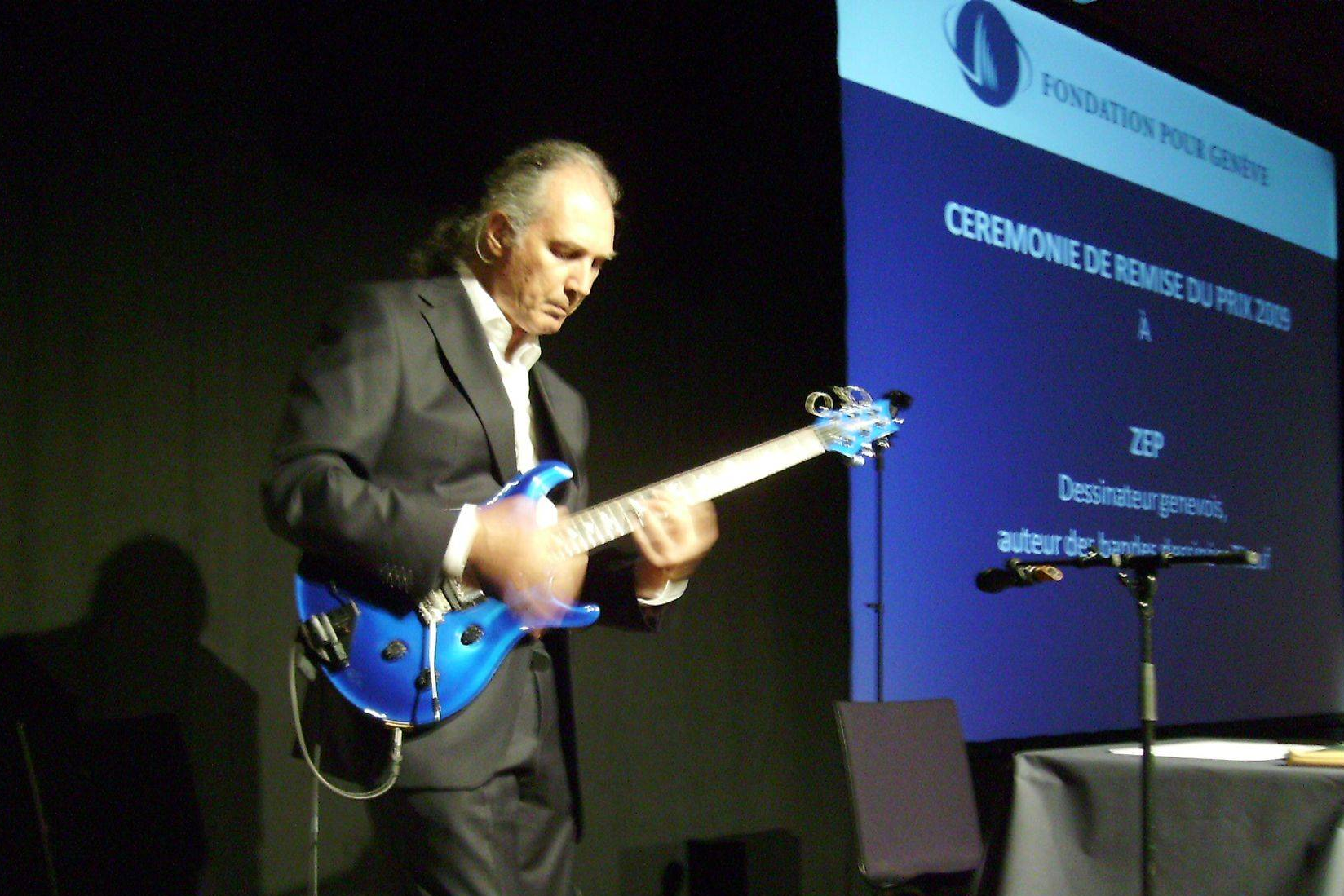
Drawing on his experience as a composer, improviser and facilitator, he has developed an original approach to listening that helps individuals and organizations understand not only how to listen more effectively, but what prevents us from truly listening in the first place.


His work invites participants to discover listening as an active, intentional practice that transforms the quality of conversations, collaboration and leadership. As Jean-François often says:


“Ears can go where eyes can’t see.”


Jean-François leads our Listening Culture. He's  a member of the International Listening Association (ILA)  where he served as Chairperson of the International Day of Listening,  Vice-President of Coach for Peace (Geneva, Switzerland), composer for Eustache & Cie, and composer and improviser with the collective Le CoCo.